


Awards & Recognition





Honolulu’s innovation economy and cross-Pacific finance make digital-asset tax exposure a real and growing risk. Bitcoin and other digital assets are considered property for U.S. tax purposes, not currency, which means that sales, swaps, payments, mining, staking, airdrops, and many other transactions can trigger income or capital-gain reporting. The IRS requires every filer on Forms 1040, 1041, 1065, 1120, and 1120-S to answer the digital assets question each year and to report all related income. If you had digital-asset transactions, you must report them whether or not they produced a gain or loss.
At the Tax Law Offices of David W. Klasing, our team of dual-licensed Criminal Tax Defense Attorneys and CPAs combines the advocacy of a law firm with the rigor of a CPA practice in a single, coordinated team. We reconstruct missing crypto records, calculate basis and fair market value at each disposition, and prepare amended or delinquent returns that protect you from unnecessary civil or criminal tax exposure. When the facts warrant it, we guide clients through the IRS Voluntary Disclosure Practice to resolve willful noncompliance, minimize penalties, and avoid prosecution. Only an attorney can confer attorney-client privilege and work-product protection, and only an attorney can extend that protection to accountants engaged under a Kovel agreement for legal advice.
How the IRS is Policing Crypto Right Now
Property Treatment and Taxable Events
The IRS established the baseline in Notice 2014-21, stating that virtual currency is considered property. Revenue Ruling 2019-24 explains how hard forks and airdrops are taxed, and Revenue Ruling 2023-14 addresses when staking rewards are taxable. Together, these authorities make clear that crypto-to-crypto swaps, payments for goods or services, and many reward streams produce taxable income that must be tracked and reported.
Annual Return Disclosures
The digital-assets question appears on individual, business, trust, and estate returns. IRS guidance details when to check Yes or No and underscores that simple wallet-to-wallet transfers you control, by themselves, do not trigger a Yes.
Broker Reporting is Now Underway
The Treasury and the IRS have issued final regulations under Section 6045, which require custodial digital-asset brokers to report customer sales and exchanges on the new Form 1099-DA, effective with transactions on or after January 1, 2025. These regulations include transitional relief and phased requirements that will run through 2026 and beyond. The rules initially cover custodial platforms, kiosks, specific hosted wallets, and some payment processors. The government plans separate rules for non-custodial or decentralized brokers. Backup withholding and basis reporting are phased in under subsequent guidance. Expect dramatically more third-party reporting to the IRS.
$10,000 Receipt Reports Under Section 6050I
Congress expanded the definition of “cash” to include digital assets; however, the IRS issued transitional guidance stating that businesses do not yet include digital assets when determining whether a Form 8300 filing is required, pending the issuance of regulations. Cash-only thresholds still apply.
John Doe Summonses and Data Analytics
The DOJ and IRS have repeatedly used John Doe summonses to identify U.S. users at central crypto intermediaries, including Coinbase and the sFOX-related bank M.Y. Safra. The pattern is clear: the government will obtain platform user data where appropriate and match it to returns.
IRS-CI Enforcement
The IRS Criminal Investigation’s annual reports show thousands of new investigations each year, a conviction rate of nearly 90 percent for accepted cases, and an explicit focus on cyber and digital-asset crimes. This is why early, disciplined damage control is critical if you sense criminal tax exposure.
Common High-risk Crypto Fact Patterns
Unreported Gains or Swaps
Because crypto is property, swapping Coin A for Coin B is a taxable disposition of Coin A. Many taxpayers who traded actively on exchanges or DEXs have unreported gains or losses across dozens or hundreds of transactions. The IRS expects accurate basis, holding period, and FMV at each disposition.
Mining, Staking, Airdrops, and Rewards
Block rewards, staking distributions, and certain airdrops are typically ordinary income when you have dominion and control over the units, followed by capital gain or loss on later disposition. We categorize each stream correctly and fix prior-year omissions.
Use of Crypto for Payments
Paying vendors or employees in crypto produces taxable income to the recipient and can trigger payroll and information-reporting duties. Businesses must maintain contemporaneous FMV records in U.S. dollars.
Platform Failures, Frozen Assets, and Lost Keys
We evaluate casualty, theft, or worthlessness theories conservatively and align positions with current IRS publications and case guidance to reduce audit risk.
Letters, CP Notices, and Audit Selections Tied to Exchange Data
If you received an IRS letter about unreported crypto, do not respond on your own. Mishandling the first contact can turn a civil matter into a criminal tax investigation. We manage all communications and negotiate the scope of any exam.
Voluntary Disclosure and Penalty Minimization
If you willfully failed to report income from crypto or other sources, a timely voluntary disclosure is often the safest path back into compliance. To be timely, your disclosure must occur before the IRS starts a civil exam or criminal tax investigation and before the government obtains your information from a third party and acts on it. When accepted, the IRS Voluntary Disclosure Practice can offer a nearly guaranteed chance of avoiding criminal tax prosecution and resolving liabilities in a predictable framework that often reduces civil penalties relative to the worst-case scenario. Do not attempt this without counsel. Only attorneys can provide privilege and direct Kovel accountants without turning your preparer into a witness against you.
Bitcoin Market Developments and Why They Matter for Taxes
The SEC approved the listing and trading of spot Bitcoin ETPs on national securities exchanges on January 10, 2024, which helped bring new investors into the asset class through regulated brokerage accounts. For tax purposes, ETP shares are securities, but underlying Bitcoin tax rules still apply when you dispose of shares or receive distributions. The 2024 Bitcoin halving also occurred later that spring. Market catalysts do not change your core duty to report income and gains accurately under IRS property rules.
What to do if IRS-CI or an Examiner Contacts You in Honolulu
- Verify and pause. Request credentials, obtain business cards, and determine whether the matter is an administrative CI case or a grand jury investigation. Then stop the interview and invoke your right to counsel. Lying to a federal agent is a separate felony under 18 U.S.C. 1001.
- Do not call your accountant. Accountant communications are not privileged. Engage counsel first so we can extend privilege to accounting assistance through a Kovel arrangement.
- Control documents and narratives. At the Tax Law Offices of David W. Klasing, we route all responses through counsel, limit interviews, and sequence productions to avoid unwittingly supplying evidence of willfulness.
Contact the Tax Law Offices of David W. Klasing Today
At the Tax Law Offices of David W. Klasing, our dual-licensed Tax Attorneys and CPAs can intervene the moment there is any sign your matter could turn criminal. If you received an IRS crypto letter, a summons or subpoena, unexpected contact from IRS Criminal Investigation, or you discovered unreported digital-asset income or offshore activity, we will assert your rights, halt direct questioning, preserve confidentiality through attorney-client and work-product protections, and deploy Kovel accountants to gather and analyze facts without sacrificing privilege. We reconstruct missing records, model tax and penalty exposure, craft a defense that aims to keep your case civil, and, where warranted, evaluate and execute a timely voluntary disclosure. From controlling audit scope and interviews to engaging IRS-CI or DOJ Tax on your behalf when appropriate, our objective is disciplined damage control that protects your liberty and your net worth.
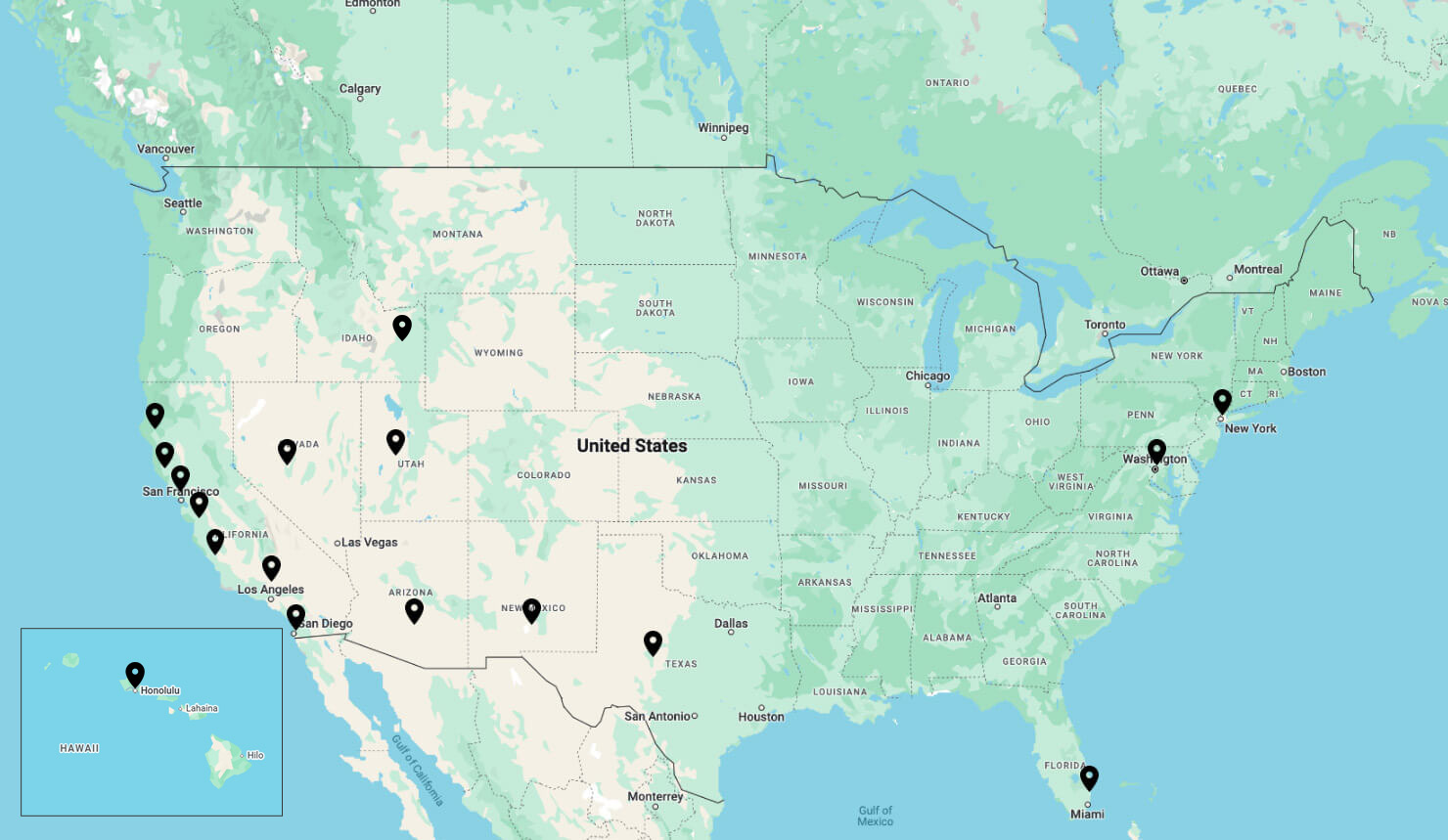
David’s proven proficiency is now available in Honolulu, Hawaii, at our appointment-only satellite office, providing both legal and federal tax services in one place—at a single hourly billing rate. We have introduced a flexible scheduling option, allowing our clients to reserve a four-hour slot at any of our satellite locations. David W. Klasing will travel to any of our satellite offices to meet with you personally. This option must be preceded by a one-hour phone or GoToMeeting consultation to warrant incurring the travel expenses and opportunity costs of traveling. We have designed this service to benefit our clients, with no additional travel expenses added to your bill. Call us at 1-(808)-518-2380 or complete our online contact form today.
Our Hawaii, Honolulu Office is Conveniently Located at:
1003 Bishop Street, Suite 2700
Honolulu, HI 96813
Telephone: 1-(808)-518-2380