


Awards & Recognition





In the heart of the Pacific, Oahu shines as a hub of innovation, hospitality, and entrepreneurial zeal. A testament to modern business practices and growth, the Island tells stories of progress, with neighborhoods animated by hospitality, construction, real estate, and small business dreams. Beneath this vibrant economy, the complex labyrinth of federal tax law still looms large.
In April 2023, the Internal Revenue Service released a multi-year Strategic Operating Plan, initially supported by approximately $ 80 billion, to become a digital-first agency. The plan prioritizes analytics-driven enforcement, expanded use of machine learning and artificial intelligence, and upgraded exam tools that identify intentional or inadvertent noncompliance more efficiently. While modernization promises better service, it also underscores the need for meticulous federal filings and highlights the risk that small mistakes can escalate if not handled correctly. As part of these changes, the IRS, in 2025, ended most unannounced revenue-officer visits and now makes contact by appointment letter 725-B, while initial audit contact generally arrives by mail.
In Hawaii, where bold entrepreneurship meets global capital flows, residents can at times tread close to the edges of evolving federal requirements. The IRS’s technology-forward approach, coupled with increased enforcement staffing, puts a premium on early risk assessment and disciplined tax audit defense. The takeaway is simple: precision in compliance matters, and the cost of missteps can be high. Also, in May 2025, the IRS launched 125,000 cases targeting high-income non-filers with financial activity topping 100 billion dollars, a clear signal that high-risk profiles are a priority.
Why IRS Audits in Hawaii Demand Vigilance
Addressing federal tax disputes in Hawaii, with its mix of small businesses, professional practices, real estate ventures, and cross-border income, demands a nuanced approach. Whether you are an individual or a growing enterprise, issues like reporting foreign source income, payroll tax compliance, or structuring a business transition with federal tax consequences can surface quickly. When an IRS audit begins, the initial impulse might be to yield to every request for a fast closure. That impulse seldom serves the taxpayer’s best interests.
Beyond the initial concern, it is critical to distinguish a routine civil IRS audit from a life-altering criminal tax investigation conducted by the IRS Criminal Investigation Division. A civil tax audit verifies the accuracy of filings. A criminal tax investigation seeks evidence to support criminal tax charges. Understanding the line between the two, and how quickly a civil exam can be referred to CI when badges of fraud appear, is essential for every Hawaii taxpayer. IRS Criminal Investigation reported for fiscal year 2024 that it initiated more than 2,600 investigations, obtained over 1,500 convictions, and again recorded a conviction rate near 90 percent.
Given the IRS modernization and expanded hiring, the stakes are higher than in past cycles. Engaging a dual licensed Tax Audit Attorney and CPA early helps you navigate procedures with clarity, defend against unnecessary adjustments and penalties, and prepare for or control any follow-on collection actions.
If you are in Honolulu or anywhere in the Hawaiian islands, and you suspect errors on prior returns or want to understand the implications of the IRS’s current enforcement posture, contact our dual-licensed tax audit attorneys & CPAs at the Tax Law Offices of David W. Klasing. Use our online contact form or call us at 800-681-1295.
IRS Audits, What They Are and Why Engaging Tax Counsel Promptly Helps
The IRS audits to ensure accurate reporting and payment under U.S. tax law. An audit does not automatically imply wrongdoing. Engaging a dual-licensed Tax Attorney and CPA early provides critical guidance on your rights, helps narrow the scope, and manages the potential outcomes.
- The IRS primarily selects returns through computerized scoring, including the Discriminant Function System. A higher score suggests a greater risk of understated income.
- Many audits stem from inconsistencies. A lifestyle that appears inconsistent with reported income, or large charitable deductions relative to income, can be the red flags that lead to high-risk eggshell or reverse eggshell audits. An eggshell audit occurs when the client has committed criminal acts to evade tax that risk discovery during a civil exam. A reverse eggshell audit is a disguised criminal tax investigation posing as a civil audit, often where a technical fraud advisor or CI is quietly guiding the civil examiner to develop evidence for criminal tax prosecution without alerting the taxpayer or representative.
- Simple filing errors, such as transposed numbers or omitted income, also trigger audits. Returns are computer-matched to third-party information like Forms W-2 and 1099.
- Businesses that report losses year after year may face scrutiny, including hobby loss inquiries or a broader audit.
- The IRS collects data from public records and informants. Perceived gaps between a taxpayer’s quality of life and reported income often prompt deeper inquiry.
- Representation quality often determines outcomes. Poor handling can lead to criminal tax referrals and 75 percent civil tax fraud penalties. A proper strategy can keep matters civil and limit exposure to accuracy-related penalties, typically 20 percent where thresholds are met. When a 25 percent omission of gross income is involved, the statute of limitations can extend to six years, and in the case of fraud, there is no statute of limitations.
IRS Tax Audit Timeframe
- Ordinarily, three tax years are at issue. If there is a 25 percent omission of gross income, the statute can reach six years. Evidence of fraud can remove the statute of limitations entirely.
- Retain returns, records, and IRS correspondence for at least three years, and longer where complexity or potential disputes exist.
- Where the IRS believes a substantial omission occurred, it may examine six years or more.
How IRS Audits Begin and Proceed
Most audits begin by mail, with a letter that outlines the scope and requested items. The IRS may request bills, receipts, legal documents, loan agreements, logs, or insurance records. Types of audits include:
- Correspondence Audit: handled entirely by mail for less complex issues.
- Office Audit: an in-person meeting at a local IRS office.
- Field Audit: an examiner visits your business or home for interviews and records review.
A criminal tax investigation by IRS-CI can begin covertly. If you are approached unexpectedly by special agents, exercise caution. They often already know the answers to their questions. Speak with our dual-licensed tax audit attorneys & CPAs at the Tax Law Offices of David W. Kalsing before engaging in any discussion. IRS-CI’s 2024 report highlights the program’s global reach and continued emphasis on tax and related financial crimes, reinforcing why early counsel is critical when criminal tax exposure is a possibility.
What Happens After an IRS Tax Audit
The IRS finalizes its findings with proposed adjustments. Outcomes can include additional tax, penalties, and interest, a refund, or a no-change result. You have the right to agree or to challenge the findings through the Independent Office of Appeals and, if necessary, the U.S. Tax Court. Our dual licensed Tax Litigation and Appeals Attorneys & CPAs handle the complete process.
Contact the Tax Law Offices of David W. Klasing if You are Worried About a High-Risk IRS Tax Audit
The Tax Law Offices of David W. Klasing is a beacon of federal tax audit defense excellence, driven by a long record of notable accomplishments. David W. Klasing holds an A+ rating from the Better Business Bureau and a perfect 10.0 score from AVVO, reflecting a steadfast commitment to exceptional audit defense representation. In a nation with more than a million attorneys and over half a million CPAs, only an estimated 24,000 professionals are dual licensed. Fewer still, roughly 3,000, have also earned a Master’s in Taxation. David W. Klasing is part of this elite group, leveraging unmatched academic training and nearly three decades of hands-on experience to guide clients through IRS audit challenges.
Compliance with federal tax law is intricate, especially for business owners, high-net-worth individuals, and those in unique situations such as divorce, dual citizenship, or material foreign holdings. Even seemingly straightforward, amended returns or scheduled audits can produce complex legal and financial issues. At the Tax Law Offices of David W. Klasing, we analyze each client’s facts and craft a defense strategy tailored to their exposure. We neutralize common IRS maneuvers, present the facts most favorable to your position, work to curtail proposed additional federal tax, and minimize or avoid related civil and criminal tax penalties wherever possible.
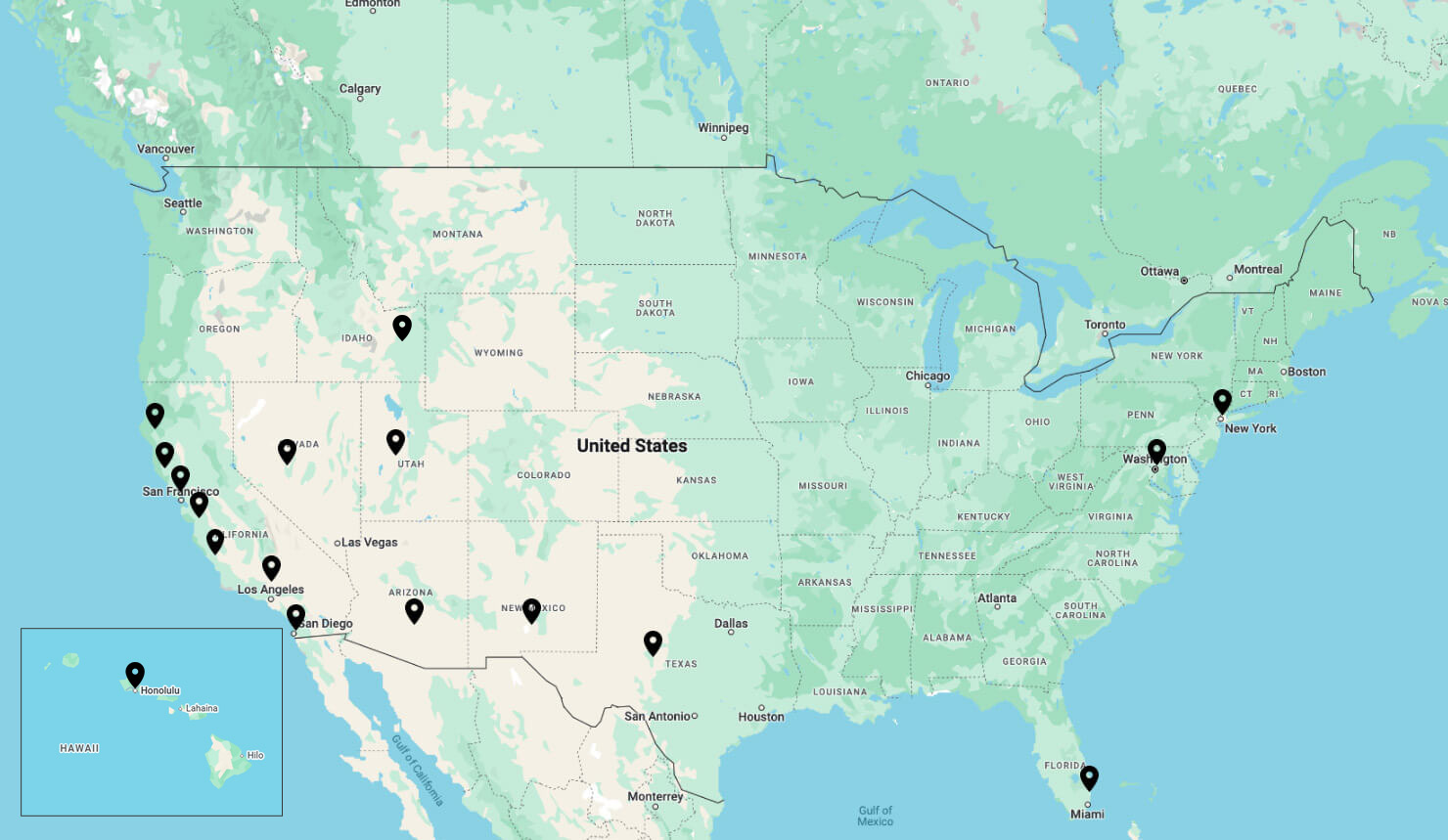
David’s proven proficiency is now available in Honolulu, Hawaii, at our appointment-only satellite office, providing both legal and federal tax services in one place—at a single hourly billing rate. We have introduced a flexible scheduling option where our clients can reserve a four-hour slot at any of our satellite locations. David W. Klasing will travel to any of our satellite offices to meet with you personally. This option must be preceded by a one-hour phone or GoToMeeting consultation to warrant incurring the travel expenses and opportunity costs of traveling. We have designed this service to benefit our clients, with no additional travel expenses added to your bill. Call us at (702) 997-6465 or complete our online contact form today.
Our Honolulu, Hawaii Office is Conveniently Located at:
1003 Bishop Street, Suite 2700
Honolulu, HI 96813
Telephone: (808)-518-2380